

Business Tips, Tools, & Techniques for the Neurodivergent Photographer
Hello, fellow neurodivergent creative/photographer/business owner… I’m Raini! I’m an elopement photographer and neurospicy CEO based in Edinburgh, Scotland. I’ve spent the last several years figuring out how to run a business with a neurodivergent brain that refuses to follow the rules, and now, I’m here to share what I’ve learned with you.
A quick (but important) disclaimer
I’m not an expert or medical practitioner. The following advice comes from my own experience and wee things I’ve picked up along the way. I’m going to throw a lot of neurodivergent terms and techniques at you, but know that a lot of this info can be helpful for neurotypicals as well.
As I take you through some of my favourite tools, systems, and techniques that support me as a neurodivergent photographer & business owner, I hope you’ll take what resonates with you and discard anything that doesn’t. This is a very personal journey, and I’m simply here to share what I’ve discovered along the way!
3 Ways to Overcome Executive Dysfunction in Your Photography Business
If “just f*cking do it” doesn’t work for you…
Being neurodivergent can feel like having 100 different tabs open simultaneously. Oftentimes, no amount of willpower can make you tackle the task at hand, no matter how urgent it is, or figure out how to prioritise what to work on.
This, my dear neurospicy friend, is called executive dysfunction. (Though there is nothing “dysfunctional” about anyone who deals with it. Can we get a better word?)
Executive dysfunction affects a vast majority of us neurodivergent folks, and is something we have to learn to deal with on a pretty much daily basis. ED essentially disrupts your ability to manage your thoughts and take action, as well as shift from one topic or task to another. You can see how this would make it a wee bit tricky to run a business, which requires your brain to constantly shift between tasks, ideas, schedules, & more!
In this first section, I want to share with you some tried + tested tips that I’ve found helpful for wrangling dysfunction – both for regular tasks in my daily life and within my business.
1. Body Doubling
Body doubling is one of the most effective strategies for getting started on a task that feels impossible to approach. Sometimes getting the ball rolling is the hardest part of marking anything off your to-do list, as it’s easy to procrastinate and get distracted from the job at hand. This is where body doubling comes in!
Body doubling is simply the practice of being present alongside another, well, body, while you work – either physically, in person, or virtually. This adds a layer of accountability to whatever you may be working on, as you’re both working on something you need to get done… and when you know someone is expecting you to get it done, you’re more likely to get your butt into gear and take action. Sometimes you just need the added pressure of being “watched” to hold yourself responsible, however silly it may sound!
Another benefit of body doubling is the intentional time block it creates for your task or project. If you plan and set aside, say, an hour in the afternoon to dedicate to X task, you can prepare yourself to minimise distractions and fully commit yourself to working for that hour. You’re less likely to waste time if you know, “I only have this one hour to work on this task, and then I will set it aside.”
There are many ways to body double – the first being to grab a family, friend, or fellow business owner nearby and body double in person. Head to a coffee shop you love or invite them over to your place to hold each other accountable and create a more fun, positive work atmosphere.
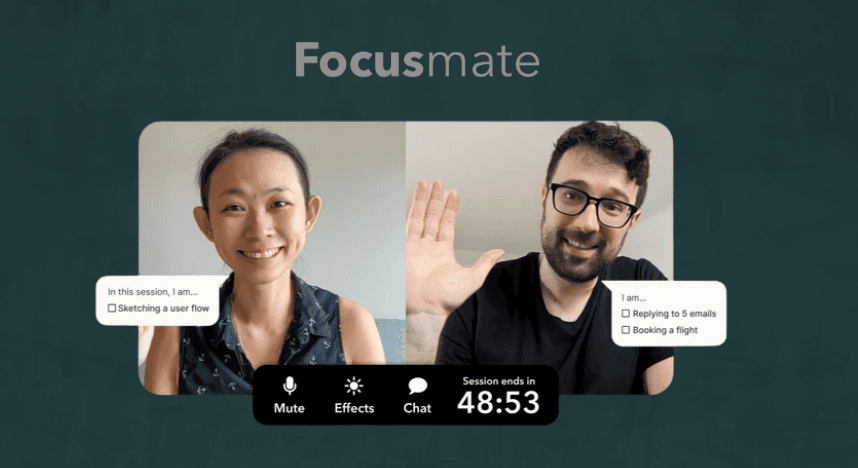
Alternatively, there are many virtual body doubling options – one of my personal favourites being Focusmate. They offer 25, 50 and 75-minute sessions in all time zones, throughout the day, where you can join and work no matter what you need to get done! You simply book a session, join a call with a virtual coworking partner, and celebrate your progress at the end. Or, if the idea of a one-on-one call intimidates you, try a group-based program like Flow Club, where you can drop into a room with multiple other folks who are ready to focus.
2. The 5-Minute Rule
This one almost always works for me when I remember to use it:
If you can’t start, shrink your task to 5 minutes.
When it comes to executive dysfunction, sometimes half the battle is just getting started. Analysis paralysis takes over, or a task feels much too overwhelming/large to complete. When you run into this, set a timer for 5 minutes (or whatever time you please), and simply complete as MUCH as you can in those 5 minutes.
This is often enough of a kickstart to build momentum and keep going – but don’t feel bad if it’s not! 5 minutes of work is better than nothing, and you’ll likely feel proud of yourself for biting the bullet and just starting.
Pro tip: Physical timers are great for keeping you aware of the time counting down. Get one like this and keep it on your desk for easy access, anytime you need it – whether you’re having trouble getting started with folding your laundry, writing an email, or posting on social media.
3. Gamification
Neurodivergent brains thrive on challenge and rewards, so I always recommend using gamification to help overcome executive dysfunction. Plus it just makes your work environment a whole lot more fun! There are two ways I personally like to do this: Interval Sprints and the Carrot + Stick Method.
Interval Sprints:
Similar to the 5-minute rule, I want you to turn off all distractions, set an interval timer, and create a competition with yourself to see how much you can get done.
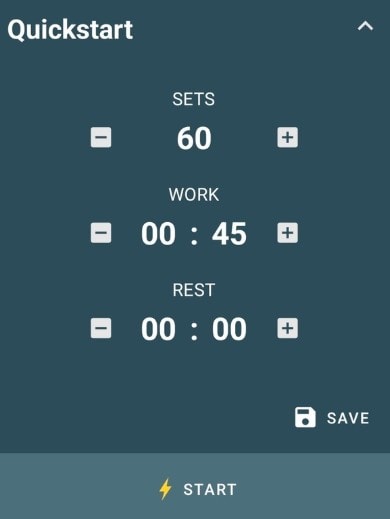
For me, this often looks like setting the interval timer to beep every 45 seconds for a round of 60 sets (i.e. 45 mins). In theory, I allow myself max of 45 seconds to edit each image. The beep reminds me not to spend too long editing each image (hello perfectionist!) and it becomes a fun game where I try to beat my past self (e.g. last time I edited 55 images, let’s see if I can get to 60+ this time).
This is a brilliant technique when I just need to power through edits as quick as possible but I do find I can only do a few rounds of this before I need to go back to a more regular pace.
I use a basic sports interval training app (Pomodoro timers etc. won’t work for this).
Carrot + Stick Method:
Another option is to use a reward/punishment system – this can be monetary or otherwise!
We’ll start with “carrots,” or positive reinforcement/rewards. Here’s an example: If I can edit a gallery within a certain timeframe (such as a few weeks ahead of my deadline), I give myself a monetary reward. Maybe for you, you treat yourself with a coffee or sweet from the bakery next door, a fun meal out at a pub, or a new book. The money goes into a savings space inside my bank account for safe keeping.
For me, I have a wishlist of things I wouldn’t normally let myself buy (i.e. stuff which is pricey or a bit too much of a luxury for my usual spending) and I save up my editing reward money to buy these things. I find this very motivating because I’m working towards having something I know I wouldn’t otherwise buy. Dopamine goldmine!
If you’re more stubborn and respond better to “punishments,” or “sticks,” go the opposite way and find something you don’t want to do, but will have to if you don’t complete your task. My favourite one is having to donate to a political party or sports team I really dislike if I don’t deliver the gallery or complete my task on time… it’s a great (albeit sort of intense) motivator!
And you could always do both if need more accountability!
Simple Time Management Tips for the Neurodivergent Business Owner
Next, I wanted to delve into a few ways to manage your time as a neurodivergent photographer… because I know firsthand how tricky this can be in your personal life, not to mention in business, when people are relying on you for deadlines, due dates, etc.
Traditional time management techniques (such as time blocking) don’t often work for us ND business owners with brains that function a little differently, so these are the alternatives I’ve found to be most successful for me.
Honour your flow
ND’s often find time blocking challenging… so I encourage you to honour and go with your own flow instead. I know that “honouring your flow” sounds a bit woo-woo, but it’s about finding ways of working that suit you best – rather than trying to fit into a prescribed idea of the “right” way to get shit done.
Personally, I hate time blocking, so I’ve found a flexible weekly plan more suited to me. One that allows me to adjust my schedule as needed, follow the fluctuations of my energy every day, and not feel pressure to complete a certain task if my brain isn’t up to it.
And if you need to try and coax your mind into a higher state of flow/productivity, many people have had a lot of success with the following soundscapes while working:
- Brown noise
- Mario Kart Music
- Tavern Music (my personal favourite)
Try a (flexible) weekly planning routine
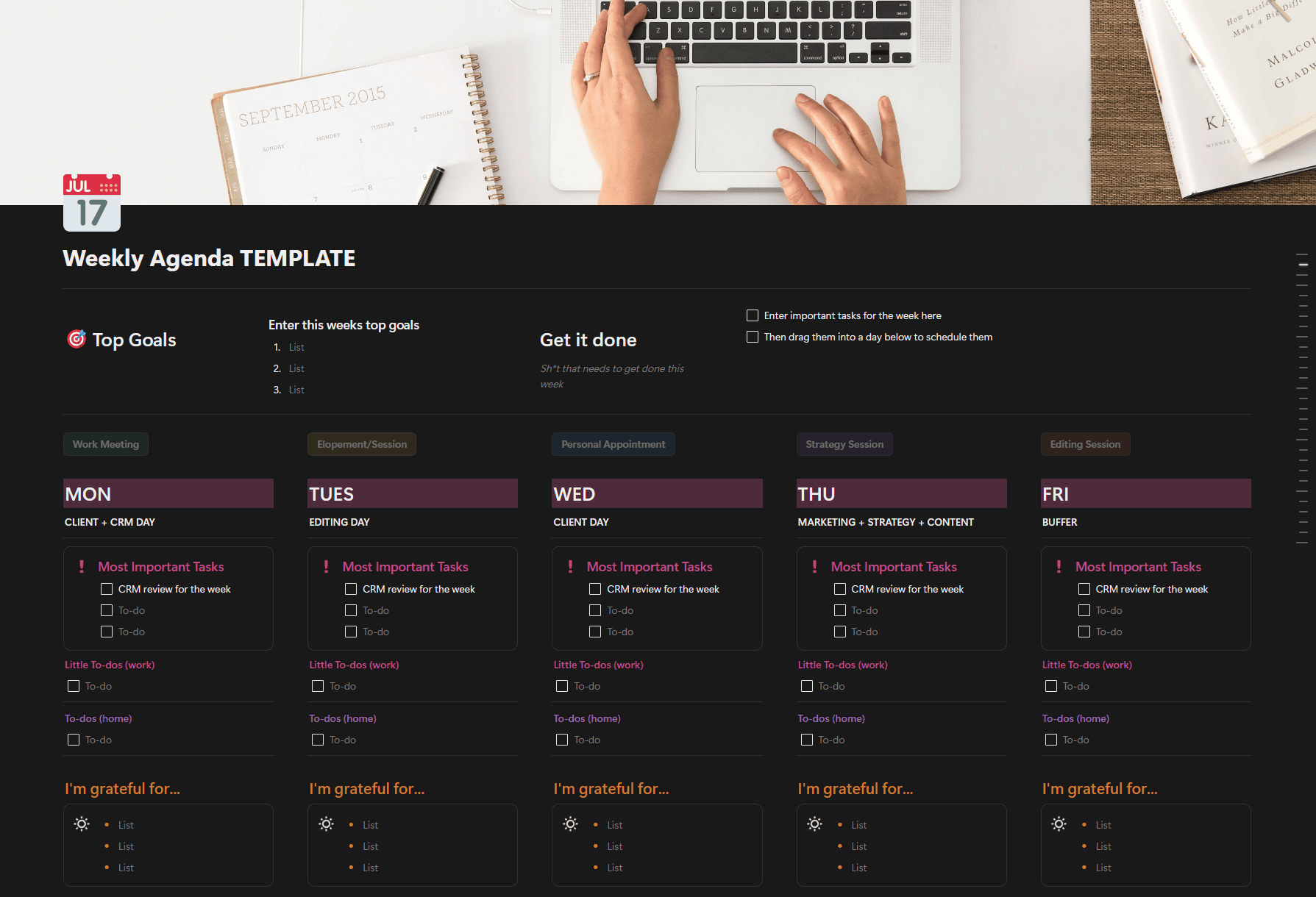
Rather than assign every task a specific time on my calendar each week, I prefer to create a flexible weekly plan – one where I can easily shift tasks around as my energy and flow allow throughout the week. I personally use Notion for this (which I’ll chat about more in a minute), as Notion makes it super easy to drag tasks around + adapt my schedule as needed.
If you’d like to experiment with flexible weekly planning but are not sure where to start… Here is a basic weekly planning template that is a nice, easy introduction to Notion!
To use this template:
- Sign up to Notion for a free account
- Duplicate the below template using the squares icon in the top right-hand corner of the page
- Watch this walkthrough video for a quick intro on how to use it.
(If you are one of those kinda weird folks who love/need timeblocking, then I’ve heard great things about using Motion AI – a recommendation from Dave, my ADHD husband!)
Create a Flow Menu
Finally, I find having a “Flow Menu” incredibly helpful when I am feeling productive and motivated, but I’m not sure what I need to get done. To create your own Flow Menu, identify what tasks you find Easy or Hard when it comes to motivation/energy/getting going… then this menu will help on those days where you feel a bit stuck, and need something easy to choose from.
Sometimes, just getting started on one task can help your motivation snowball into the harder, more important tasks later.
Here’s an example of my own Flow Menu:
EASY
- Cleaning office space
- Cleaning/prepping gear
- Accounting admin (capturing/tagging receipts)
- Read/watch a training module
- Organise SD cards
MEDIUM
- Replying to enquiries
- Editing/culling
- Location guides/timelines for couples
- Curating social media posts
HARD
- Replying to tricky emails
- Writing blogs
- Updating systems
- Learning a new technique/tool
- Submissions
- Website redesign/updates
8 Helpful Tools for Neurodivergent Photographers
Another thing that makes productivity especially hard for neurodivergent folks is the very modern issue of needing to make thousands of decisions every day.
And to that I say… automate that shit.
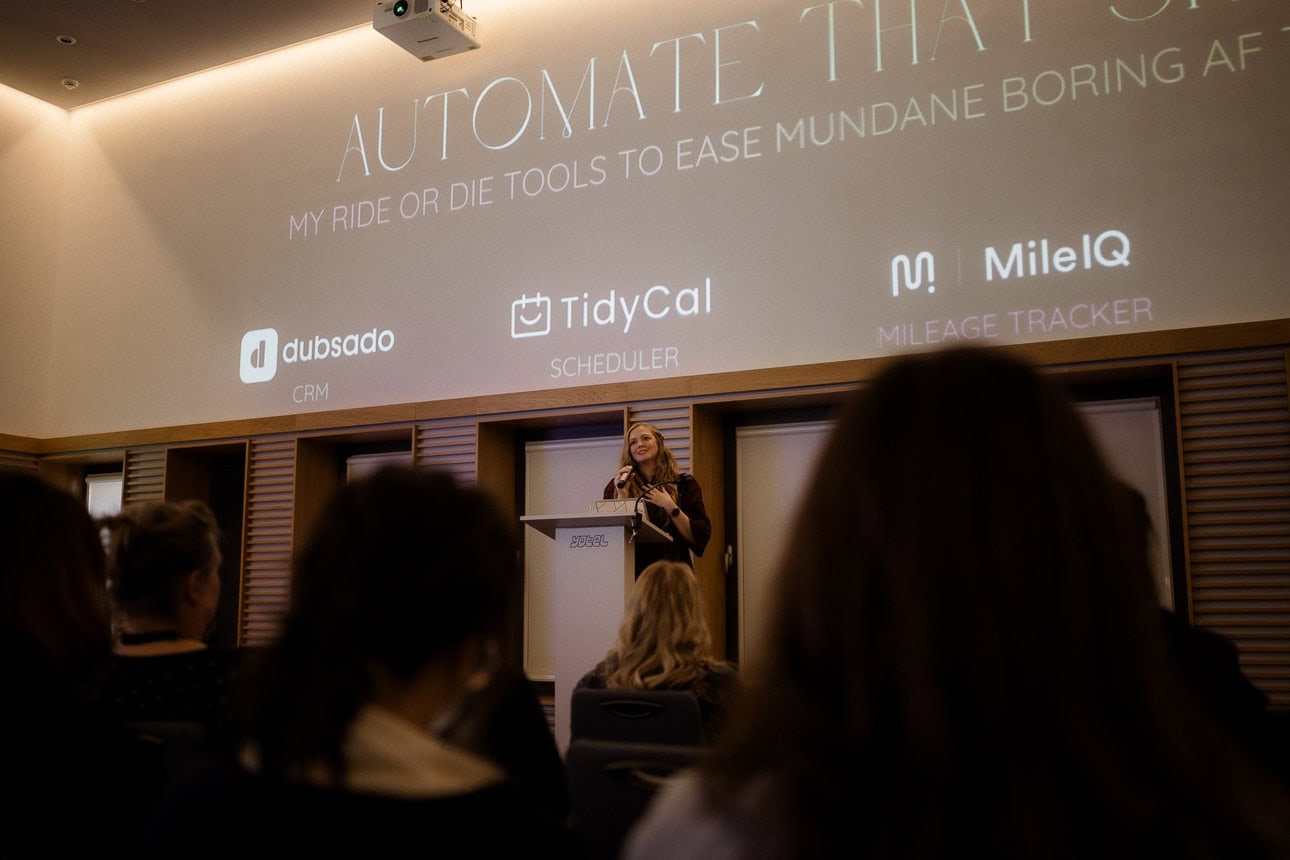
If you can invest in the right tools and systems to automate the tedious parts of your work, you’ll greatly reduce your task load and decision-making burden. That’s why I’m going to take you through my ride-or-die tools to ease the mundane, boring AF tasks that don’t need to be taking up nearly so much of your headspace.
(Please note that a few of these are referral/affiliate codes, and I may receive a small reward for your referral at no extra cost to you!)
Notion
Be honest with me: how many tabs do you have open right now?
10+?
20+?
This is a shame-free zone… but we ARE going to address that infinite well of tabs and how to start closing them. Because everything needs a home – otherwise they’ll stay open forever in your brain. We hold everything so tightly and will eventually run out of memory
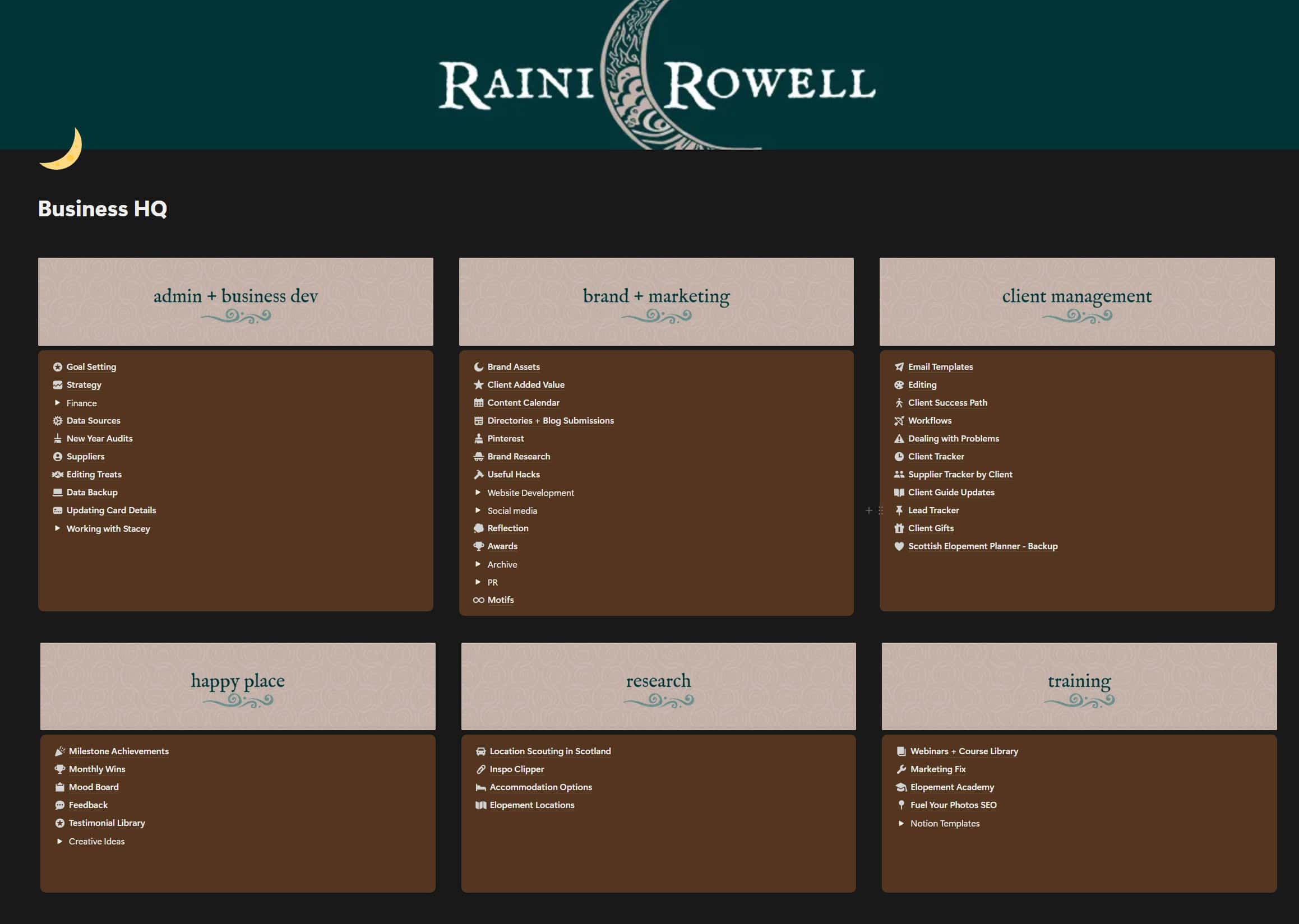
My favourite tool for helping close those tabs and organise all the loose information floating around my brain is Notion. It’s a block-building program that combines note-taking, task management, and databases into one customisable workspace – and it’s pure magic if I do say so myself! You can truly store info in whatever way suits you, e.g.:
- Databases
- Calendars
- Galleries
- Kanban boards
- Wiki pages
- Checklists
Here are a few of the (many) ways you can create safe places & clear systems for your brain in Notion:
- Task management
- Lead tracking
- Edit queue management
- Supplier tracking
- Website development
- Content calendar
- Goal-setting
- Workflow review
- Brand hub (design assets)
- Tracking accomplishments
- Training tracking
- Idea sandbox
- Location research
- Problem-solving tips
I highly recommend trying your hand at Notion to see how you can make it work for you… happy to nerd out about it separately if you’d like more hands-on support. I love it so much that I was invited to become a Notion Ambassador – meaning I’m always happy to chat all things Notion!
You can begin by making a free account below:
Dubsado
Dubsado is the brain for your business that remembers to send the contracts, invoices, questionnaires, and client reminders so you don’t have to. It’s a powerful CRM designed primarily for creative small businesses like mine and yours! I love it because it’s very flexible, but still structured – and it can do SO many things. Generating invoices, contracts, quotes, client reminders, and questionnaires are just the tip of the iceberg… it even has a built-in scheduler. This really is the heart of all things client organisation/admin – I’d be lost if I had to remember to do everything it does manually!!
Aftershoot
Aftershoot is one of the big players in the photo-editing AI arena right now. It’s well-established, innovative, and affordable; plus, its all-inclusive packages make it a no-brainer for me. I use Aftershoot to provide an initial base edit for exposure/WB, then go in and hand-edit everything else!
As an official Aftershoot partner, you can use my discount code link below to get 15% off!
Kiwi for Gmail
Going with your flow can be tricky when there are emails to attend to, and an inbox to tame… especially if you’re anything like me and find emails to be tedious or stressful. This is where Kiwi comes in handy – it’s a desktop Gmail and Google Suite that makes inbox management much easier and more accessible.
The main appeal for me is that it takes the whole Gsuite experience outside of a web browser (like Chrome) so I don’t get distracted by other tabs or miss notifications.
Three more tips and tricks to make your inbox a little more manageable:
- Remember to communicate to your clients what your response times are. Having it in your footer makes sure this happens automatically and that proper expectations are set from the get-go! But also, give yourself some grace if you fall behind… you’re a human being with a busy life, and your clients will understand.
- Create a separate email address for client comms. This was an absolute game-changer for me – I have an email address which is strictly for client & CRM communications. No more losing important client emails in the sea of admin nonsense and marketing emails (those go to a different free Gmail address). It also means I can stick to inbox zero, which, as a neurodivergent person, feels like an absolute feat tbh!
- Don’t snooze on the Snooze button in Gmail. This is how I am able to maintain inbox zero (i.e. no emails). If an email doesn’t need an immediate action (or I don’t have the energy for it) I’ll snooze it so it returns to my inbox at a later time. Keeps my mind and my inbox clear.
- Crowd source your conflict kit. This is a bit of weird one… I’m in a lot of photographer FB groups and whenever anyone posts about a tough situation they are facing, there’s at least a dozen amazing copy-paste responses from photographers on what to say/do. So I copy them into my Notion just in case I ever face the same situation. Helps me feel ready for anything – even the tough stuff!
Interval timers
There are many interval timer websites and apps out there to help you set aside time for certain tasks, with breaks in between. Pomodoro Timer is a classic interval timer that bounces between work sprints (set to the length of your choice) and either long or short breaks. You can write down any tasks you’d like to complete in the time span, add White Noise or Brown Noise in the background, and customise the interface to fit your best focus/flow mode!
MileIQ
MileIQ is a lifesaver for photographers who are constantly travelling and on the road – it’s a mileage tracker that automatically captures every penny of travel expenses while you’re busy driving to your shoots. No need to frantically write everything down on a spreadsheet when tax time rolls around… this magical app does it all for you, in real time!
TidyCal / Calendly
Having a scheduling site/app such as TidyCal or Calendly is imperative to any photography business… it’ll stop the “15-email-deep” dance of trying to find a meeting time that works for everyone. (Your CRM may also have this functionality built in – I know Dubsado does!)
Packteo
Packteo is a super helpful checklist creator that ensures you never leave your SD cards or backup batteries behind when travelling. Makes it easy to create and manage checklists for any upcoming trip, be it for business or simply a holiday!
Don’t forget to automate yourself!
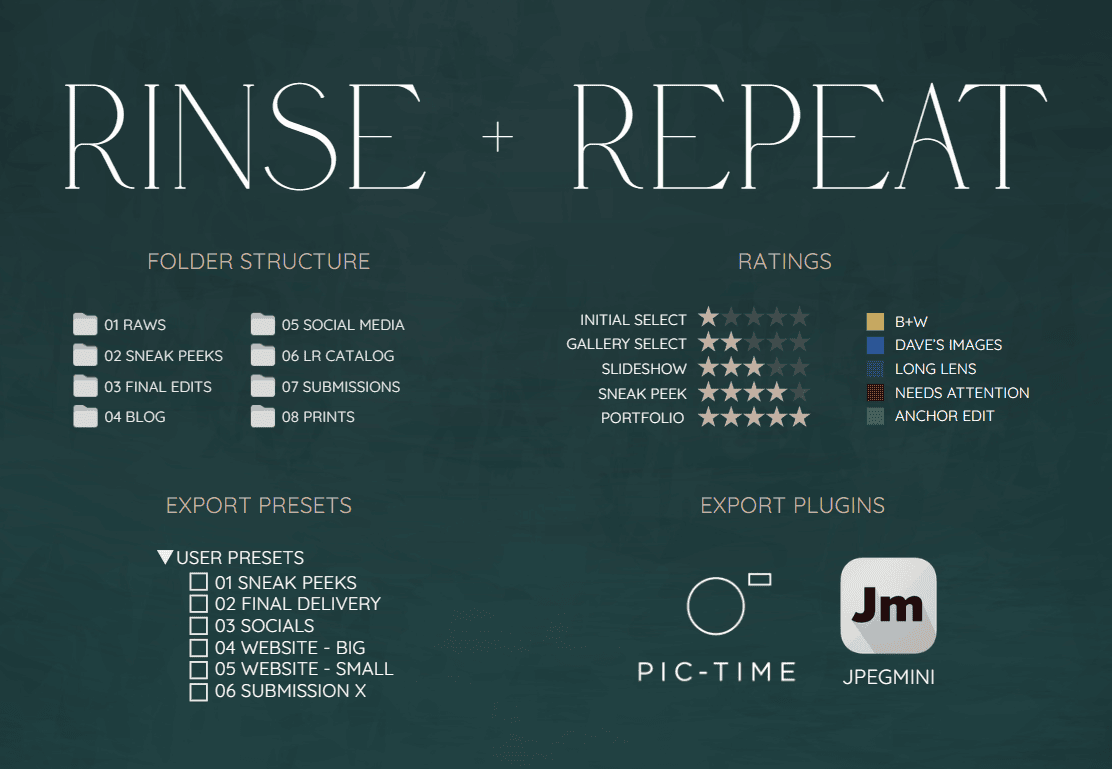
As photographers, there are a lot of things we do over and over again. One way we can reduce decision fatigue is creating systems and repeatable actions for ourselves. Following the same workflow for specific tasks every time. It then becomes habit / muscle memory and makes like easier if you ever need to rememver what you did later down the line.
Say it with me. Consistent, repeatable actions.
Here is an example of ways I automate myself inside Adobe Lightroom.
Should You Outsource as a Neurodivergent Business Owner?
One key lesson I’ve learned in my years as a neurodivergent business owner: just because you can doesn’t mean you should.
If you’re struggling with trying to do it all in your business… let tools and professionals help you! Neurodivergent individuals tend to think we can (and should) do it all, and we often overcommit to what we can achieve in the time we have. By outsourcing certain tasks to the right systems, programs, and people, you free yourself up to work on the stuff which actually *needs* your own special sauce.
I outsource a few things…
- Culling (to a human)
- Base WB/Exp edit (Aftershoot)
- Accounting (also to a human)
Finding the right people and tools to outsource your work to can take time, so be patient! Ask around for referrals from folks you trust in the industry and spend time figuring out what/who works best for your unique needs.
How to Overcome Rejection as a Neurodivergent Business Owner
Before I finish off, let’s touch briefly on the more emotional and vulnerable side of being neurodivergent as a business owner.
Have you heard of the term “RSD”? It stands for Rejection Sensitivity Disorder, and shows up often in ND folks. Essentially, it means you have an overwhelming and overpowering sensitivity to feeling rejected in some way; that can look like assuming people hate you based on micro-behaviours, or feeling super depressed and worthless when you don’t book a couple.
“Nobody loves me. Everybody hates me. I think I’ll go eat worms.”
We’ve all been there at some point, and trust me when I say I understand how challenging it is to run a business that relies heavily on people, emotions, and feelings. Creating art is a terrifying, brave thing to do, and unfortunately, rejection just comes with the territory in one way or another!
The key to wrangling RSD is prevention – it’s 100x harder to get out of an RSD spiral than it is to put safeguards in place.
Here are 3 common scenarios where RSD rears its ugly head
Listening to industry noise that makes you feel less than
Antidote: mute/unfollow anyone who triggers these feelings in you. Even if they are friends and peers, your mental health is more important! We all have to do what we can to protect our peace – there is no shame or guilt in that.
Being ghosted by enquiries
Antidote: ghosting is always bound to happen but you can help minimise this by answering all the key questions for a couple *before* they enquire… i.e. Do they have a sense of your pricing bracket? What’s the experience like? What style of photography do you offer? etc. Make it clear and simple so couples are coming to you pre-qualified.
When couples don’t book
Antidote: this sounds a bit woo-woo, but I really feel that mindset is key. Try to internalise the belief that there is a ‘right’ photographer for everyone and them saying no opens space for a couple who is more aligned.
Bless + release!
Luckily, when you do get caught in an RSD spiral, there are a few quick strategies you can try so you don’t lose hours and days ruminating over whatever triggered it!
- Read your “Happy” / “Wins” folder filled with positive testimonials, screenshots, and words from clients/fellow creatives
- Celebrate a small win/tick off something easy (this tells our brains that we are useful/still moving forward)
- Shake it off (literally) (doing some form of physical exertion is a proven technique for getting you out of your head!)
- Phone a friend and ask for an ear
Let’s put these into practice anytime we feel that spiral coming on, deal?
What next?
Whew, that is a wrap! Has your number of open tabs changed at all since starting this post? Maybe it’s decreased, or maybe it’s increased because you decided to look up MileIQ or Notion…
Either way, it’s not about having zero tabs open, but about finding ways to manage them effectively. Doing so will serve you, your clients, and your creativity as a neurodivergent business owner/photographer, and I hope some of these tools and tips might make that a little easier.
And if you want to open one more tab to seek out further support, feel free to browse my 1:1 mentor offerings! My biggest strengths lie in client experience, nerding out over systems (clearly), portfolio curation, and more… there is so much I can help you with and so many ways I can offer my perspective.

Who the hell does she think she is…?
Hi, I’m Raini
*cue an awkward re-introduction from a classic introvert*
I’m an elopement photographer and neurospicy CEO based in Edinburgh, Scotland. I’ve spent last several years figuring out how to run a business with a brain that refuses to follow the rules.
More photography insights from me
Neurospicy CEO – Photography Farm Thrive Conference Speaker 2026
Hello Photography Farmers! Still have 100 tabs open? Let’s close a few together. Who the hell does she think she is…? Hi, I’m Raini *cue an awkward re-introduction from a classic introvert* I’m an elopement photographer and neurospicy CEO based in Edinburgh, Scotland. I’ve spent last several years figuring out how to run a business…
Leave a Reply